Why should I brush my cat’s teeth?
Roughly 50% to 80% of all cats over the age of four have periodontal disease. Periodontal disease is an infection of the tissues surrounding the teeth. It starts as gingivitis, caused by plaque coming into contact with the gingiva (gums).
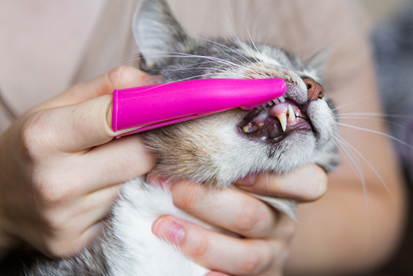
If plaque is not removed through regular brushing, it thickens and mineralizes, resulting in tartar. Left untreated, gingivitis may progress to destructive periodontal disease, which may be painful and ultimately lead to tooth loss.
When should I brush my cat’s teeth?
Like humans, cats need daily dental care to help decrease plaque and prevent tartar accumulation. Teaching your cat to accept you brushing their teeth will take some training, but it will be relatively easy once they become used to the process.
Daily brushing is most beneficial and will help to establish a routine. Brushing three times a week is the minimum recommendation to help remove plaque and prevent tartar accumulation. It is best to teach your cat to accept brushing while she is still a kitten. If you have an older cat, the process may take a little longer, but is still worth the effort.
What steps should I follow to teach my cat to accept tooth brushing?
To be successful in brushing your cat’s teeth, you must make it a positive experience for both of you.
- Choose a quiet time and place to begin. Select a small room where you can place your cat on a surface such as a counter or tabletop (on a blanket or towel) or sit with her in your lap. Ensure the location is one where you can close the door to seal off escape avenues.
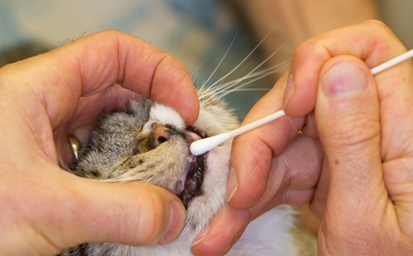
- Dip a cotton swab (Q-tip) into tuna water drained from a can of tuna fish. The tuna water does not have any beneficial dental or cleaning effects, but most cats like the taste of it, which will provide a positive connection between the tuna juice and the tooth-brushing experience.
- Place your cat’s head at a 45-degree angle and gently pull back her lips. The mouth can remain closed.
- Gently rub the applicator tip along the area where the gum tissue touches the tooth surface (the gingival margin). This is the region where plaque accumulates and gingivitis is initiated. Only the outside surfaces of the teeth need to be rubbed.
- For the first few lessons, rub the cotton swab along only a few teeth rather than the whole mouth, especially if your cat is unsure or nervous about the process.
- Once your cat is completely used to you rubbing her teeth with a cotton swab, it’s time to start using a toothbrush.
What type of toothbrush should I use?
Commercial toothbrushes are available that are specifically designed for cats, including brushes with angled handles, small brushes that fit comfortably in your hand, and finger toothbrushes designed to fit over the tip of your finger. For some cats, you can use a very soft toothbrush designed for use in human babies. You can also use a finger toothbrush, gauze wrapped around a finger, or a cotton swab.
Check with your veterinarian if you are uncertain of which brush to use. Ultimately, it is preferable to use a brush where the bristles can reach just below the gumline at the tooth/gum interface. Whatever type of toothbrush you use, be gentle and go slowly, as it is easy to accidentally poke the tip of the toothbrush against the gums and cause some irritation.
Can I use human toothpaste or baking soda instead of pet toothpaste?
No, human toothpastes contain ingredients that should not be swallowed. If it is swallowed, it can cause an upset stomach or digestive disturbances. Some human toothpastes contain high levels of sodium, which can make your pet ill. Baking soda has a high alkaline content and, if swallowed, can upset the acid balance in the stomach and digestive tract. In addition, baking soda does not taste good, which may cause your cat to be uncooperative when you try to brush her teeth.
Pet toothpaste is available in several different flavors that are appetizing to cats. By using a product that tastes good, your cat will be more likely to enjoy the whole experience. A list of dental products that have been accepted by the Veterinary Oral Health Counsel can be found at vohc.org.
How do I brush my cat’s teeth?
Follow these steps for a successful tooth brushing session.
1. Apply a small amount of toothpaste to the toothbrush. Place your cat’s head at a 45-degree angle and gently pull back her lips. The mouth can remain closed.
2. Concentrate on brushing the large cheek teeth and the canine teeth at first — the teeth where plaque and tartar accumulate most quickly.
3. Do not worry about brushing the tips or insides of the teeth unless your cat is very cooperative. Most periodontal damage occurs on the outer surfaces of the teeth and around the roots; this is where you should direct your efforts. The cat’s abrasive tongue tends to remove plaque from the inner surfaces of the teeth, reducing the need for brushing these surfaces.
4. Gradually work up to brushing all the teeth (this will probably take several days or weeks). Make sure you reach the big teeth at the back of the mouth.
How much time should I spend brushing my cat’s teeth?
Try to brush for approximately 30 seconds per side.
Is there anything else I should know?
Yes. A cat’s mouth contains lots of bacteria. If possible, wear gloves while brushing your cat’s teeth. If this limits your ability to effectively brush her teeth, then be sure to thoroughly wash your hands with soap and water after you are finished. Also, rinse the toothbrush thoroughly before putting it away. Replace the toothbrush every three months, and if you have several cats, use a different toothbrush for each one.
| © Copyright 2026 LifeLearn Inc. Used and/or modified with permission under license. This content written by LifeLearn Animal Health (LifeLearn Inc.) is licensed to this practice for the personal use of our clients. Any copying, printing or further distribution is prohibited without the express written consent of LifeLearn. This content does not contain all available information for any referenced medications and has not been reviewed by the FDA Center for Veterinary Medicine, or Health Canada Veterinary Drugs Directorate. This content may help answer commonly asked questions, but is not a substitute for medical advice, or a proper consultation and/or clinical examination of your pet by a veterinarian. Please contact your veterinarian if you have any questions or concerns about your pet’s health. Last updated on Jun 21, 2023. |